Sunday, October 10, 2010

Bruschal Museum of "Canned Music"


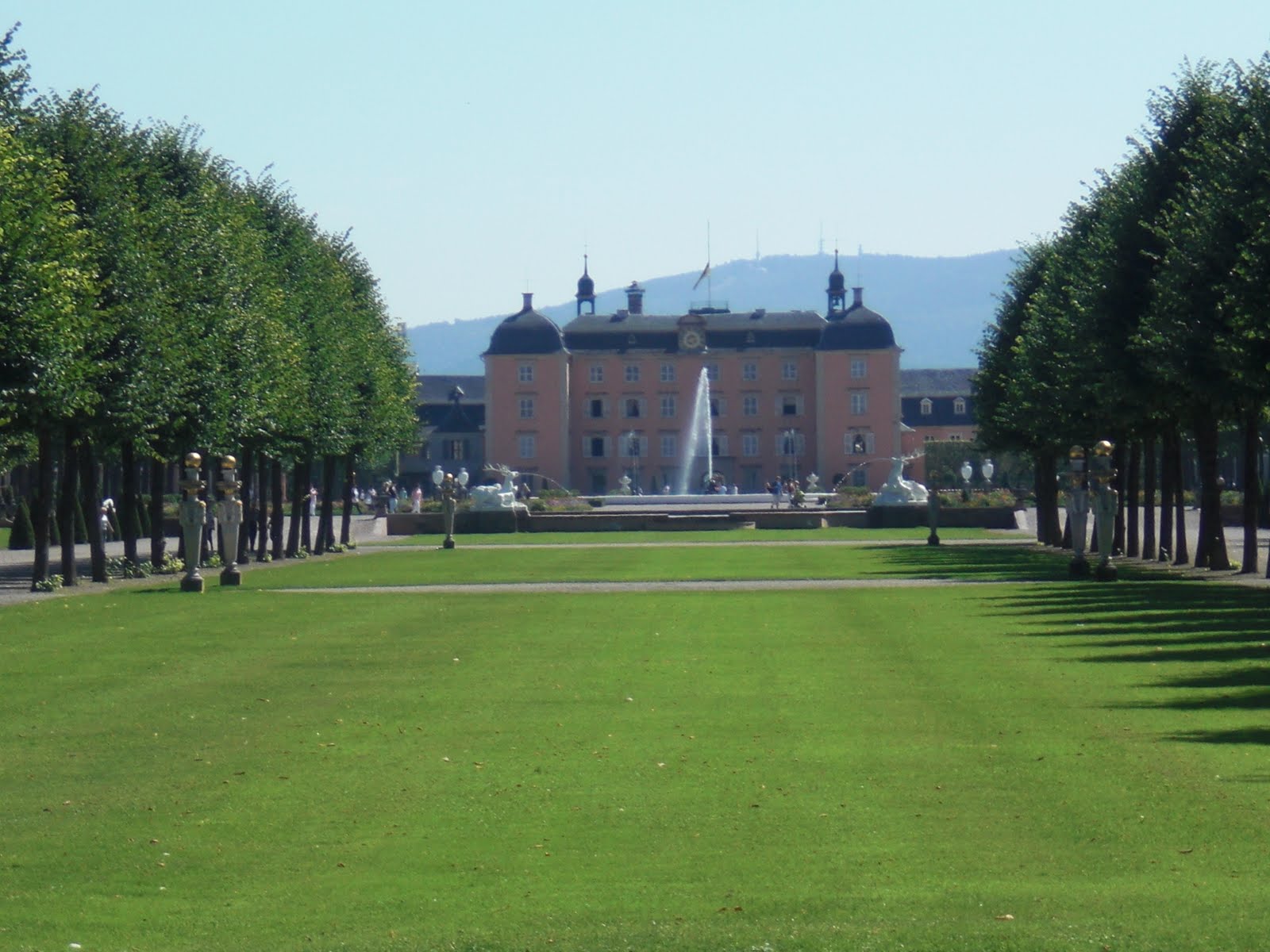
Schloss Bruchsal Castle was once the home of the Prince Bishop of Speyer. More that fifty buildings comprise the complex.  The picture to the right is the central building and it is adorned in baroque style with typical stucco ornaments richly gilded in gold.  Dragons spouting water and chalk white statues add a classical elegance to the facade of the central structure.  The architecture, painting and stucco blends to form an artistic whole.  The work inside by the famous architect Balthazar Neumann is even more impressive.  The Prince Bishop Damien Hugo von Schönborn, a man of influence and connoisseur of art, was the one who commissioned it.
  
The palace now houses a museum devoted to 350 years of self-playing musical instruments.  This was essentially a running history of the18th century salons of the nobility and upper middle class, through the 19th music bars and finally to the cinemas and fairs of the 20th century.
Our tour guide treated us to the sights and sounds of each era and the mechanical instruments that produced them.  From simple instruments that could be held in the palm of your hand, to grandiose elaborate mechanical monstrosities that occupied huge ball rooms.  I was amazed at the scope, diversity and complexity of this art form which reveals my ignorance of the role mechanical instruments played in music history.  As a case in point, I saw one cabinet sized piece that comprised half a dozen instruments playing harmoniously together entirely through mechanical means.  Others were operated by life size mannequins through discreetly placed levers, gears and pulleys.  I subsequent did some research to find hundreds, even thousands of collectors devoted to the pursuit of these art forms and as I began to explore, it did not take much imagination to see why.

We proceeded on to Ladenburg, the home of Karl Benz.  We walked from the old town market square along the Neckar River. We passed what was the garage, where Karl Benz build his first automobile. We continued on to the original manufacturing site which is now a museum housing vintage Benz vehicles.  Arendje and I are standing beside the first patented vehicle  made in 1886. It has a 2 and a half horsepower motor with wire spoke wheels advanced from a bicycle design.
There was a Model # 2 and it is thought only one was made. 

The lady giving us the tour is Jutta Benz, the great granddaughter of Karl Benz.  She provided a personal history of the Benz family and the events surrounding the initial attempts to get some public exposure to the whole idea of a motorized vehicle.  Here she is standing in front of the last vehicle Carl Benz drove before his death in 1929.  In the space of 40 years the design, function and manufacture of the vehicle had changed dramatically, as evidenced here.

Jutta told us a story of how  her great grandmother Bertha Benz,  unbeknownst to her husband took her two sons and decided to generate a promotional campaign of her own.  Carl was decidedly frustrated by all the road blocks in his attempts to getting some commercial interest and positive exposure to his new motorized vehicle.  His wife Bertha, realizing his growing malaise, decided to take the matter in her own hands.  She and her two sons pushed the vehicle quietly out of the yard and started it up with the intent of heading to her mother's place 90 kilometers away.  For Carl, who was still asleep, they  left a brief note indicating where they were going.  They became deeply concerned about their fuel supply as it was quickly diminishing.  In Weisloch they stopped at the municipal chemist's, which still exists today; it proudly commemorates its role as the first gas station.  They had to make two more stops to replenish their supply before they finally returned home.  This vehicle was not without its challenges.  Along the way they had to make some adjustments,  like cleaning a clogged fuel line with a hat pin and insulating a bare ignition cable with Bertha's garter.  What became more of a challenge was having to push the vehicle up hills and carefully guide it down hills as it had a single shoe break that made the descent somewhat of an adventure.

This, the world's first long distance road trip, by car, proved to be a success.  It proved the viability of motorized transportation and set in motion a bright future.  The 180 kilometer trip stifled the skeptical voice of the doubters.  Twenty five of these vehicles were made, with some new fittings, given the experience of the first voyageurs.

We got more than we bargained for with the stop at this museum.  Arendje accommodated my interest and I think actually enjoyed the account by Jutta Benz. 


Sunday, October 3, 2010

Ronneburg Medieval Festival


   First mentioned in 1258, Ronneburg Castle subsequently changed hands on numerous occasions.  Over the course of time it served as a haven for religious refugees, gypsies and Jews, a sanctuary for monks, a staging point for knights and residence for counts and aristocratic families. 

The castle presently houses a restaurant, a museum and a falconry center. 

We took this site in largely due to an annual medieval festival occurring at the castle this weekend.  This proved to be another worthwhile venture.  People from every walk of life were represented in traditional dress.  They apparently are all members of a club who travel to different local festivals. They led us on a procession through the marketplace up to the central court of the castle.  Once there, they engaged the spectators in shows designed to humor the crowds.


In addition to the music, there were small booths and kiosks selling an assortment of products, a number of which were clearly attempting to capture the flavor of the medieval period they were representing.  This picture is of an active group of musicians, who robustly played their assorted instruments with an enthusiasm which was contagious.  


The kids would have loved this. 

Ninety percent of those present were dressed in every variety of era appropriate costume.  I felt a little out of place in blue jeans; even the little children were dressed up.


This event is kind of like our fall fair with a notable leaning to the fun part.


We took the time to explore the castle.  This site was probably characteristic of actual life and living conditions of the middle ages.  The rooms were functional with little in the way of adornment. simple chests, armoirs and furnishings with little of the intricate woodwork and carvings typical of the palaces and more notable castles. Huge pots, heavy tables, benches and solid chairs were the norm in a number of rooms.


We walked to the top of the Keep and took in a view of the court yard and the surrounding countryside, with the first signs of fall colours in the trees below.  We could see the skyscrapers of Frankfurt off in the distance.  


The person in the brown peaked cap kept us amused with his facial contortions and slap stick antics. Of course it was in German, but the body language and facial expression provided sufficient entertainment for those of us less linguistically proficient. The variety of costumes made me wonder if there was indeed any where near the diversity I was seeing here.


Sunday, September 26, 2010

Athens

The Temple of Zeus
Across the street from the present site of the LDS chapel is Hadrians Arch and behind it is the ruins of the Temple of Zeus.  From the back balcony of the church, there is a spectacular view of the Acropolis.  Our Monday morning started with a trip to the church.  After a tour of the church building located on three floors of this down town site, we walked a block to a site referred to as "The Grove Academe." Wikipedia states the word  akademeiaAn academy (Greek Ἀκαδημία) is an institution of higher learning, research, or honorary membership. The name traces back to Plato's school of philosophy, founded approximately 385 BC at Akademia, a sanctuary of Athena, the goddess of wisdom and skillThe sacred space, dedicated to the goddess of wisdom,Athena, had formerly been an olive grove, hence the expression "the groves of Academe". It was here that Aristotle, Plato and other great minds would gather to discuss important matters of the day.  Under the protection of the olive trees, the beginnings of democracy and the roots f modern academia were established with the likes of these great philosophers.

Athens is one of the oldest cities in the world, spanning a period of 3,400 years.  As a city state, it was a centre for the arts, learning and philosophy, home of Plato's Academy and Aristotle's Lyceum; it is widely referred to as the cradle of Western civilization and the birthplace of democracy. 


We decided to take a bus tour of the city and see as many sites as our limited time would allow. The city itself is a congested mass with bumper to bumper traffic. Our bus driver navigated the narrow streets with inches to spare on each side.  Pedestrians seemed to have no regard for rules of the road. Sidewalks are often cluttered making them almost unnavigable.  Hence,  people often would resort to the streets walking blandly along seemingly oblivious to the traffic passing within inches of them.  In spite of the congestion, Athens was alive with vendors of all sorts plying their wares in any nook and cranny available. 


This city has numerous museums as many countries are represented here, doing archeological research or coming to study.  Greco Roman or Neo Classical are the two prominant architectural styes.  No one style  dominates like in other cities.  An interesting side note is the cars are licensed with odd or even numbers and can only be driven downtown on their allocated days.  This place would take some getting used to for a Canadian used to wide open spaces.


I was totally engaged during the time here with one session after another.  It was fun but challenging. The Assistants to the President took us on a walking tour to Mars Hill where the Apostle Paul is reported to have addressed the Athenians saying: "I found an altar with this inscription: TO THE UNKNOWN GOD, whom therefore ye ignorantly worship, Him declare I unto you." This is the view from that site.


It was pretty warm when we started the walking tour. During July and August it would be almost intolerable.  Most Athenians hunker down during the heat of the day, waiting till late afternoon to venture forth again.


This last picture was a more detailed account of Mars Hill.  The rocks on the hill were worn smooth through centuries of human traffic.  The view overlooking Athens was impressive.  Most of the buildings and even homes have adopted lighter colours giving quite a different perspective than what one would see in the other parts of Europe.

Sunday, September 5, 2010

The Rhine - River of Romance


For at least twenty-five hundred years, the Rhine has been the gateway into much of the hinterland of Europe. The waters are navigable with but one or two treacherous  portions.  At any given time, two or three barges can be seen making their way ponderously upstream or quickly passing with the flow downstream, carrying everything from petrochemicals to manufactured products.
On this trip we decided to make stops along what is decidedly the most picturesque and historically rich segment of the Rhine.  This is vineyard country with castles and quaint little towns tucked in any place where land was halfway suitable for habitation.  Our plan was to stop as we felt inclined, taking in the surroundings, castles or food venues according to our tastes and the time we had available.  It was to be a full day of marvelous sites, sounds and aromas.  Our first stop was at a town called Bacharach.  The picture to the right is typical of many we saw in this charming village.
We hiked up to Burg Stahleck, once an imposing fortress, now a hostel, which  provides a commanding view of the Rhine.  Many people choose to explore the Rhine by taking advantage of the well maintained walking and bike trails
Bacharach is very much a tourist oriented community with the shops, restaurants and lodging establishments catering to the heavy summer tourist traffic. 


Oberwessel was a Celtic town in 400 B.C., then a Roman military station.  It now boasts some of the best Roman-wall and medieval tower remains on the Rhine.  The enchantment of this place lies in the old battlements crisscrossing the town with a little creek hunkered between old houses which  obviously served as a ready-made sewer in olden times.  This town and nearby Bacharach tell the story of a boy abused and killed.  Local citizens attributed the death to the Jewish population resulting in tragic consequences for the innocent Jewish citizens. 
Another castle overlooks this town and its colorful history.  The Prince of Schonburg Castle had seven spoiled daughters who always rejected suitors because of their shortcomings.  Fed up, he invited seven of his knights up to the castle and demanded that his daughters each choose one to marry.  They complained that each man had too big a nose or was too fat, too stupid, and so on.  The rude and picky girls escaped in a riverboat.  Just down stream, God turned them into the seven rocks that form the reef just downstream from the town.

Sunday, August 15, 2010

Aachen - A New Rome


More than 1200 years ago.  Aachen developed to become the Center of the European Empire.  The town has Charles the Great to thank for this ascent.  Charles built his central residence here, and fulfilled his greatest personal dream -- namely, the construction of a second 'New Rome'.  When work began on the Palatine Chapel -- when this was exactly is not known -- the foundation stone was laid for one of the most important buildings in all of Europe.  Even contemporary observers were overwhelmed by the uniqueness and pomp of the church.    During its 1200 year history, the cathedral has been renovated and expanded several times.  But never has it lost any of its unique character.  The excellent architecture and regional importance of the Aachen Cathedral led to its being added to the UNESCO World Cultural Heritage list in 1978 -- the first German historical building and art history heritage to be included in this list.


The most conspicuous part of the imposing building today is the Palatine Chapel.  On completion around the year 880 it represented a unique feat, being the first vaulted building north of the Alps.  It remained the highest vaulted room in this part of Europe for centuries.  During the reign of Charles the Great, the Palatine Chapel formed a part of a great palace complex, including living quarters and palace rooms, some of which survived to the present day.
Charles father, the Franconian king Pippin, had resided there at times.  His son Charles had been able to use the hot springs  -- which the Romans in their time had also enjoyed -- to recover from their travels and battles.  When Charles decided to settle in Aachen, his plan to extend his father's courts and favorite residence matured and he decided to turn them into an Imperial residence.  The Palatine Chapel lay at the heart of these ambitious plans.  The new palace of the Christian emperor necessitated a new representative church.
King Charles born in 742 was also known as Charlemagne.  He is recognized as the Father of Europe and the first of the great kings and rulers that followed after him.  His power and influence extended beyond the confines of present day Germany to include France, Italy and much of eastern and northern Europe.  Much of his life was spent  (53 campaigns) suppressing uprisings, battling insurgent forces and in conquests to extend his realm.  He was responsible for much of the christianizing of Europe, albeit, sometimes with brutal means. At one time 4500 Saxons were beheaded in one day.  The options were baptism or death for the pagan Saxons.  He was the consummate leader ruling with persuasion, strategy, diplomacy, energy, passion, humour and vision.   Although uneducated himself, he directed  the most just and enlightened government that Europe had known since Theodoric the Goth.  A staunch follower of the church, his generosity knew no bounds when it came to furthering the cause of Christianity, even going so far as to send money to persecuted Christians in foreign lands.

Historically seen, the cathedral  has had great fortune that the mighty dome with its 16 sided two-story ambulatory, the two-sided Imperial Lodge, the entrance hall and the West side have all remained virtually unchanged to the present day.  All parts of the building are of the highest quality, both of craftsmanship and technology, and reflect the antique Imperial demands of the monarch.  The cathedral was designed as a visual emblem of the spiritual and political renewing of the Occident.

The central building was inspired by the Eastern Roman empire.  This layout had been favored since the fifth century for all monumental buildings of representation in by Byzantium.  Charles the great however was not content to simply cite renowned famous examples from classical antiquity.  To cement his political and religious authority he spared neither troubled or expense importing original parts and furnishings from the Roman Empire.  The slender pillars in the Emporium of the Palatino church were carried over the Alps and brought to Aachen on the Emperor's demand.  Pope Hadrian himself gave permission for this to happen.  The richly decorated Proserpina sarcophagus also came to Aachen in this connection. 

However, the magnificence of the interior was not created solely through costly antiques.  Local, Carolinian workshops were also utilized to a great extent and displayed their many skills.  The exquisite works of art, such as the brawny grilles on the gallery and the bronze doors in the main and side entrances were produced for by Carolingian in workshops and were cast locally.  Of the original furnishings, more than 20 antique pillars, each bronze grilles and four bronze doors of remained to the present day, including the portal door known as the Wolf store in the west wall of the church which is now the main portal.

By sometime around 800, the court architect Otto of Metz had succeeded in setting his master's vision down in stone; the Palatine Chapel was complete.  The Christmas of the year 800 produced a further highlight: Pope Leo the third crown in Rome the Franconian King Charles is the new Emperor of the Holy Roman Empire.

The Palatino chapel was also compiles the earthly remains of its builder.  Charles the great died on 28 January 814 and was laid that same day in the antique sarcophagus, the Proserpina sarcophagus which can be found today in the cathedral treasure chamber.  In 1165, Emperor Friedrich the first also known as Barbarossa, was responsible for the corporate canonization of Charles the Great the bones of the great ruler were removed on this occasion and rest today in the sumptuous Charles shrine, completed in 1215.  At this shrine is more than 2 m long and covered with gold plated silver and enamel copper plates.  The lavish decoration consists of 16 solid silver figurines of the ruler on the side of the shrine.  It stands today in the center of the Gothic vestibule.

The long history of the cathedral in Aachen makes it unique witness of the Carolingian era.  Only in Aachen has a building survived to the present day which so closely linked with the name of Charles the great.  Even after the completion of the Palatine Chapel and the death of the mighty Emperor, the cathedral retained its status through all architectural developments as an exceptional monument of historical significance.  A great historical weight is the throne of Charles the great, to be found in the Western Bay of the balcony.  Ascending to the throne was an important part of the coronation ceremony, symbolizing coming into possession of the empire.  Otto 1 was crowned here in 936 this marked the commencement of a colourful 600 year period of coronations in Aachen.  Right up until 1531, 30 German Kings took their seats on Charles throne in a festive ceremony, symbolically succeeding the celebrated ruler.

Even during the life of Charles the Great, Aachen Cathedral was an important center of relic worship.  During the late Middle Ages, the cathedral gained super regional significance for pilgrimages.  From 1349 on and every seven years streams of pilgrims from all over Europe came to Aachen to pay tribute to the exceptional relic treasures to be found there.  From this time on, Aachen Cathedral has enjoy the same status as the famous relic sites in Jerusalem, Rome and Santiago to Compostela.  Nor is it only the relics of Charles the Great which attracts such numbers.  Since then there has been a whole number of further highly significant relics  added to the collection. 
The cathedral claims possession of unique textile relics such as Mary's dress, Christ's swaddling clothes and loincloth, or the beheading of John the Baptist.  Upon completion of Charles shrine in 1215 work commenced upon a suitable safekeeping for these treasures.  The shrine of Mary was finally completed in 1239.  This treasure chest is adorned with precious stones and is now, following almost 12 years of restoration work is on display again in the cathedral.  Pilgrimages are still made too Aachen even today.  More than 85,000 pilgrims were numbered here in the year 2000 alone.

The old Palatino Chapel could no longer cope with the large celebrations connected with the coronations, nor with the ever-growing tide of pilgrims.  Thus in 1355, the foundation capital decided to extend the building.  The new chancellor was completed after 60 years of construction on 28 January 1414, the anniversary of Charles the Great death, and Aachen Cathedral had another famous addition.  Not only the size and slender grace of this chancel was fascinating.  Using filigree buttresses and no heavy outer walls, the results flooded with light, was an architectural masterpiece.  More than 1000 m² of glass were incorporated -- no wonder that the chancel is known today as Aachen's Glasshouse.

We were not able to spend as much time as we needed  to see everything Aachen had to offer, but it still remains one of the highlights of our many trips in Germany.  Too much history is attached to this city to bypass.  We were glad we took the time to stop here.


Sunday, August 1, 2010

Mannheim - a German Anomaly


Mannheim is a conundrum.  How can a city be both an industrial and manufacturing giant and a center for theater and the musical arts?  Indeed a German anomaly!  In my own field of study, I am fascinated by paradox - characteristics that don't fit established patterns.  Mannheim opened my awareness to a number of these. Mannheim is the only city in Germany where the streets are laid out on a grid with grid addresses like R4-12.  It is also a prime example of Germany's thriving industrial machine.  The largest chemical company in the world is  based here, as well as a huge Benz factory, John Deere and Siemens.  At the same time, Mannheim has an Academy of Pop Music.  This no doubt goes back 
to an era when Mannheim was considered the place to be for young and aspiring musicians.  Mozart said, "I love Mannheim and Mannheim loves me".  Apparently that was not the case, as they refused him an opportunity to demonstrate his musical genius with their renowned orchestra.  Mozart's impetuous nature and penchant for slander may have been part of the reason but there was no doubt more to it than that.  

This city is noted for some other interesting facts.  Karl Benz introduced the first automobile here.  

Mannheim also lays claim to the first 
bicycle although this is disputed.  For the first time, I noted an unrelated but interesting fact.  
Germany is famous for the wide selection of beer but what I didn't know is there are over 500 kinds of mineral water available.  
Arendje and I were the connoisseurs of one rather flavorful example when we stopped for lunch in one of their many open air cafes.
Our day consisted of revisiting the gardens of Schwetzingen which we had visited early in the spring (remember the Easter eggs) and had promised to come back to and the palace in Mannheim, the official residence of the Palatinate.  
The 178 acre park and gardens engaged
 us most of the morning.  The pictures included here were all taken in this beautiful setting.  The palace itself is the largest Baroque palace in Germany.  It is five city blocks long and two blocks wide.  The palace complex is now a University with 400 rooms and 2000 windows.  We took an English audio tour and ventured through a number of elegantly decorated rooms reminiscent of this ornate architectural period.  Karl Theodore Prince Elector did not win many friends among the populace of Bavaria when he constructed the palace in Mannheim(see first picture below) and summer residence in Schwetzingen. 


We ran out time and energy before we ran out of places to see here. We also went into a beautiful Jesuit Church near the palace. Green marble complemented the 
beautiful artwork and graceful lines.  Two pipe organs, works of art on their own occupied the second level. This was certainly one of the visual highlights of the day.


Sunday, July 25, 2010

Burg Eltz - Intact though the ages


Our long awaited visit to Burg Eltz finally arrived.  We had heard much about this castle and were determined to visit it on a day when it wasn't too hot as there was a hike into the site that would prove most enjoyable when we could fully enjoy the surroundings.  It was a twenty minute walk to the castle, but unlike most other jaunts this one was down hill.  I thought it kind of odd they would put a castle in a valley given the strategic advantage a prominent position affords.  Half way down the trail there was look out point where we had a perfect vantage point of the castle and its position in the valley.  It actually sits on a rock promentory in the middle of a heavily wooded valley with a stream appearing to circumnavigate the castle walls.  This setting was not only picture pretty, but extremely isolated.  There was no village or town nearby.  This is what inevitably saved it from the ravages of war and conquering armies.  So it remains the same - unchanged through the centuries and therein lies the appeal of Burg Eltz.  It retains the furnishings, character and charm of  its former days.

We were relatively early and joined with a church group from south west England visiting Germany to see the Passion Play. Consequently, the tour was in English a rare bonus.   I could see from the size of the parking lots that this was a frequently visited site.  We proceeded from the armory room to the residences, the kitchen, to the guest rooms each filled with period furnishings giving a good cross section of the life and times of its inhabitants.  In addition there was a museum with artifacts of every kind to further enhance the flavor of the time.

This castle now takes a prominent position among our now extensive list of sites we have visited.  At some point I will take the time to differentiate between a castle and a fortress.  Although there is a cross over in many instances, it is not appropriate or helpful to compare the two, as they both served quite different purposes.

Thirty three generations of the same family have maintained residence here and have also retained the heirlooms and accouterments, both great and small of successive generations.  This allows for a true to life  chronicle over many centuries.  The tour guide indicated for a long period, there were three families resident in the castle, but now only one occupies a portion of it.  As you can see from the picture, great efforts are being made to stabilize this structure.  Age is takings its toll and cracks and fissures have formed, requiring ingenuous methods to counter the ongoing weathering process while still maintaining the original aesthetic appeal.

Not far from Burg Eltz is a tiny hamlet called Beilstein on the Mosel River.  We decided to take in this quaint little river side stop as it was noted for its picturesque setting on the Mosel, and also as a premier bed and breakfast location for visitors wanting a good staging point to visit interesting sites in the region.  We had lunch here and enjoyed a leisurely afternoon strolling through the narrow streets full of half timbered houses, quaint shops, friendly people and a gorgeous view of the vineyards covering the hillside.  I  find these Saturday sojourns a welcome reprieve from the intense emotional demands of my weekly assignment.  We are fortunate there are so many places to see within a couple hours of Frankfurt.