.jpg)
Offenbach is geographically, speaking a suburb of Frankfurt, although those from Offenbach would not want you to refer to it that way. Once the center of a thriving leather industry, since World War II, it has declined. What remains is a museum that portrays, in a singular way, the role leather played in the cultural history of, not only Germany but the world.Selecting pictures for inclusion here was almost pointless. There were over 15 thousand exhibits. This link will give you some idea of what we saw.
Posting pictures would hardly begin to express
the scope of this craft. As we wandered through this museum,
I was left with a broadened perspective, an appreciation of another art form and a taste of the diversity to which leather was used through the generations. I believe there is one other leather museum in the world - in Chicago. Offenbach lays claim to being the center of international exhibits on the best and latest in leather works from purses and luggage to footwear. We were shown the basic principles of the leather goods industry with examples from the work of bookbinders and saddlers. The exhibit was worldwide and attempted to encompass the changing variety of goods through the ages. One section on leather working techniques displays models of the various tanning processes together with the different types of leather and dyeing methods, and demonstrates properties of leather such as elasticity, tensile strength, susceptibility to splitting and resistance to water and fire. There were ample displays of "exotic" leathers such as crocodile, snake and lizard skin together with goods made of them. Issues surrounding the protection of endangered species are also covered here. They had a well laid out display of leather from Inuit, native leather works and cowboy duds, western saddles from various eras and full size displays depicting scenes with how and where the various leathers were used. Again I have to admire the German eye for detail, precision and historical accuracy. The museum has a major collection of shadow puppets from Thailand, India, China, Indonesia, Egypt and Turkey. Exquisitely cut from the fine leather and painted with iridescent colours, the puppets were operated by rods from below, to present plays against a translucent back-lit screen. Unusual exhibits include a set of Chinese shadow puppets that belonged to Emperor Qianlong (1711-1799), and a number of large Thai shadowfigures. Few museums in the world can boast such an outstanding shadow puppet collection.
There was a shoe museum which was more an artistic
rendition of styles and ornamental features than anything anyone would typically wear. I missed this part as I got a phone call as I often do at various and sundry times relating to my assignment. Some of these would make interesting stories too. We took this tour with 25 senior missionaries couples and sisters. We have lived long enough to have witnessed a generation when the leather industry is rapidly declining. I remember my German friends in Norther Ontario walking around in their lederhosen; luggage of any quality was always leather. |
Sunday, January 24, 2010
Offenbach Leather Museum


Sunday, January 17, 2010
Colloquy of Marburg
 Choosing where to go and what to see in Central Germany represents a challenge. The choices seem endless, each one providing a new learning experience and adventure. Marburg holds appeal on a number of counts. Perhaps of pre-eminent importance is its distinction as a university town . It was founded in 1527. Phillip(the Magnanimous) designated his university as Protestant, thus becoming the world's first and consequently, oldest Protestant University. The university was the first in the world to create a professorship in chemistry in 1609. The Brothers Grimm studied in Marburg in 1806, after which a discipline in German Studies was established. Rapunzel, one of the Grimm's Brothers' best loved fairy tales was first published in 1602. Its best know line is, "Rapunzel, Rapunzel let down your hair." The tower to which he was referring is here in Marburg.
The first Noble Prize for Medicine went to Marburg's Emil von Behring in 1901. It has one of the five high security labs in Europe and was responsible for identifying the deadly Marburg virus. You will remember it as the hemorrhagic virus of the ebola class, that infected many in East Africa. It has an international reputation in chemistry, medicine and psychology. This town of 80,000 thousand hums with the energy of its student population. Just about everyone either goes to school here or is employed by the university. This town's character is built around the youthful populations with pubs and clubs on every street. There is an element of the counter-culture here, evidenced by some of the lively protests students engage in.

We went with Gary and Melody Taylor who also work as Mental Health Advisors. Gary Taylor has three books to his credit in the field of mental health. His best selling book "Divine Union" was followed by "Perfect Parent". He says his best one is "Life is Easy - We Just Decide Its Hard." He states he had no choice on the title. This is the one that I am interested in. He comes very well prepared for this assignment. We are going to enjoy working with them.

One large painting depicted a gathering of Early Reformers of 1529 under the auspices of the resident Landgrave Phillip of Hesse known as the Coloquy of Marburg. Here Luther and Ulrich Zwingli had what was to be a seminal event. Luther still maintained the vestiges of his Catholic belief system advocating for the Eucherist as practice by the Catholic Faith. He argued that during the Sacrament, Christ's body was present. Zwingli argued against this, stating this was a metaphor and symbolic of the blood and body of Christ. This ultimately led to "The Reformers" breaking away from the then emerging Protestant Movement.
A number of Zwingli's Articles of Faith departed sharply from that of the Catholic Church, but also set the stage for closer adherence to biblically based doctrine. He took extreme exception to the pomp and sophistry, the justification for all the relics, infant baptism and indulgences. As I studied Zwingli's contributions, I realize he deserves more credit than what history has allotted him. Calvin, another Swiss reformer who followed after Zwingli, essentially incorporated most of his tenets into his own schema. In some ways, Calvin's tenets were regressive, more conformist to preexisting beliefs and practices than the highly educated and enlightened Zwingli.
Our last stop was at the Elizabethan Church. In earlier blogs, I made mention of Elizabeth who gave so selflessly to the poor. She gained great favor among the peasant class. The loss of her husband of only a few years and the trials of her charitable work took their toll. She died at the age of 24 and was buried in Marburg.

Inside are some incredible works of art. The tomb of Elizabeth is glass encased with what look like gold and precious stones. I think Elizabeth would have rejected outright such a display, preferring to give of such riches to the sick and needy. The following is taken from some historical writings: "On Good Friday, 1228, in the Franciscan House at Eisenach, Elizabeth formally renounced the world; she received from Conrad the dress of the Third Order of St. Francis. In the summer of 1228, she built the Franciscan Hospital at Marburg and on its completion, devoted herself entirely to the care of the sick, especially to those afflicted with debilitating and disfiguring diseases.
Soon after the death of Elizabeth, miracles were reported to occur at her grave in the church, especially miracles of healing. At Pentecost of the year 1235, the solemn ceremony of canonization of the "greatest woman of the German Middle Ages" was celebrated by Gregory IX at Perugia, with Conrad present. Conrad had written in support of her canonization, a letter, of which a portion is reproduced here: Elizabeth was a lifelong friend of the poor and gave herself entirely to relieving the hungry. She ordered that one of her castles should be converted into a hospital in which she gathered many of the weak and feeble. She generously gave alms to all who were in need, not only in that place but in all the territories of her husband's empire. She spent all her own revenue from her husband's four principalities, and finally she sold her luxurious possessions and rich clothes for the sake of the poor.
Twice a day, in the morning and in the evening, Elizabeth went to visit the sick. She personally cared for those who were particularly repulsive; to some she gave food, to others clothing; some she carried on her own shoulders, and performed many other kindly services. Her husband, of happy memory, gladly approved of these charitable works. Finally, when her husband died, she sought the highest perfection; filled with tears, she implored me to let her beg for alms from door to door. Good Friday of that year, when the altars had been stripped, she laid her hands on the altar in a chapel in her own town, where she had established the Friars Minor, and before witnesses she voluntarily renounced all worldly display and everything that our Savior in the gospel advises us to abandon. Even then she saw that she could still be distracted by the cares and worldly glory which had surrounded her while her husband was alive. Against my will she followed me to Marburg. Here in the town she built a hospice where she gathered together the weak and the feeble. There she attended the most wretched and contemptible at her own table.
Apart from those active good works, I declare before God that I have seldom seen a more contemplative woman.
Before her death I heard her confession. When I asked what should be done about her goods and possessions, she replied that anything which seemed to be hers belonged to the poor. She asked me to distribute everything except one worn-out dress in which she wished to be buried. When all this had been decided, she received the body of our Lord. Afterward, until vespers, she spoke often of the holiest things she had heard in sermons. Then, she devoutly commended to God all who were sitting near her, and as if falling into a gentle sleep, she died.
In August of 1235, soon after her canonization, the corner-stone of the beautiful Gothic Franciscan church of St. Elizabeth was laid at Marburg. On May 1, 1236, Emperor Frederick II attended the taking-up of the body of the saint; in 1249, the remains were placed in the choir of the church of St. Elizabeth.
Sunday, January 3, 2010
Judische Museum

I will only a share a couple of highlights. One was the background imformation provided about Oscar Schindler. After the book aptly entitled Schindler's Ark, Steven Spielberg followed with a movie named Schindler's List. When it first premiered in Germany, the impact was profound. Spielberg captured the imagery and and the plight of the Jews. I read newspaper clippings stating that Germans who watched the film wept openly.

In prewar Germany, with the coming to power of the Nazi party in 1933, Jews were quickly earmarked for segregation from the Ayran population through antisemitic laws and policies. From that time forward, there was a steady migration of Jews out Germany and Austria. Between January 1933 and December 1941, 104,098 Germans and Austrians refugees arrived in America, of whom 7,622 were academics and another 1,500 were artists. The American Mercury ran a headline of one art show in New York, "Hitler's Gift to America". The list of great thinkers was impressive including Albert Einstein, Wernher Von Braun, a host of world renown mathematicians, the composer Arnold Schoenberg, theologian and philosopher Paul Tillich and the list goes on. Paul Tillich, along with other famous refugees invitees, were asked to contribute lectures at the Benjamin Franklin Lectures at the University of Pennsylvania. He closed his lecture by posing a question; "Will America remain what it has become to us (exiles), a country in which people from every country can overcome their spiritual provincialism? One can be both a world power politically and a provincial people spiritually." He poses a pertinent question as relevant today as 65 years ago.
Sunday, December 13, 2009
Johnnesberg - The Wood Carver & Aschaffenburg

One of the oft mentioned places to visit by a number of tourists was the wood carver in Johnnesberg. Literally thousands of dollars have been spent on the fine wood carvings by American visitors every year. I went with the expectation a few dozen well crafted carvings suitable for purchase as representations of German contribution to this art form. I had seen some magnificent wood carvings on earlier visits (like the one on the left) so it quite a surprise to enter room after room of carvings from 1 cm in height to some over a meter.
The variety was the first surprise. It was Christmas so there were creche scenes in various sizes with all the appropriate animals, human figurines, and background structures carved with such intricate detail so as to discern character traits in the facial features. At least two good size rooms were devoted to Christmas carvings. Germans typically will begin an annual tradition of purchasing one or two items, and each year adding to the collection until they have a full creche scene. The prices reflect the crafstmanship. Prices ranged from a few euros for a tiny hen or duck up to 2600 euro for large meter tall carvings. Carvings of animals and male and female figurines of all sizes were in abundance, many of them with historically appropriate garb either real of fabled. I reserved a carving of two horses drawing a winter sleigh loaded down with logs. They even have Moroni kneeling over the gold plates in a posture of prayer with a sword propped on his side. It was odd how many of these carvings made me think of scenes at home of people I know who would enjoy this combination of art and craft. This has to be shared.

We then went to Aschaffenburg to take in some of the sites Arendje had looked up prior to the trip. We have been asked to sit on a committee to arrange tours and suggest interesting sites for the missionary group to visit. We stopped at the tourist information kiosk and loaded up on brochures and then proceeded to visit what we had time for, with the intent of looking at possible places for others to see. Of course, we had to take in the Christmas Market with its smaller town character and charm. As with almost every place we visit there is something that sets it apart, something unique, something that stands out in a memorable way. Aschaffenburg was no exception. This city of 70,000 was voted Germany's most desireable place to live. Even before we became aware of that fact Arendje had commented about the acccessible and pedestrian friendly downtown area. Street after street was designated pedestrians only, so shops of all types made this shopping atmosphere quite enjoyable even for me. Most shops open doors with colorful displays making browsing convenient and varied. I wondered about security as many seemed to have their wares so accessible as to be prone to shoplifters. This did not appear to be a concern.
To add to the inviting atmosphere are the normal accouterments I have come to expect; the museums ( we went to one), old churches, markets, abundant parks, and old houses. To this, Aschenfanburg adds a very picturesque setting on the Mainze River, festivals throughout the year with a rich Franconian cultural heritage, sports venues and a very cosmopolitan atmosphere. It is 20 minutes form the Frankfurt airport, so it is no surprise this city has found its place as a staging point for tourists and business clientelle alike. The following is a great photo depiction with a bundle of historically significant images of Aschaffenburg. We left our cameras at home today.
Sunday, December 6, 2009
Christmas Markets (Weihnactsmarkt)

The Christmas Market has its origin as far back as 1393 when ecclesiastical mystery plays were held in the Romerberg. The original play was supposedly based on a chance encounter, when King Otto the Great and his brother Heinrich reconciled after a long period of estrangement. Heinrich is said to have fallen to his knees before his brother outside the chapel after Christmas Mass.
Germans are characterized by their hard work, hearty appetites, love of beer and an exuberant penchant for celebrating . You put that all together at Christmas time and you will have a festive celebration that is hard to match. I regret that you are not here to see this and more importantly, to feel the energy and festive air.
Negotiating though the masses of people was a challenge - being a northern BC boy, I am used to my space. That is something not easily found in downtown Frankfurt at Christmas.
This entry would not be complete without commenting on the food. There is no shortage here, meats and sausages of all kinds, barbecued, fried, grilled and sauteed. The little kiosks appeared to be able to cook up anything including waffles, crepes, potato pancakes and Quiche Lorraine. Arendje was even finding cookies and treats she remembered from her childhood in Holland. I too saw French and Belge food products including bagettes and Belgium and Swiss chocolates. I finally settled on a hot buttered corn on the cob - a fine treat in December. It would take months and a hefty dining-out budget to begin to sample the variety of specialty foods available here. Drinks also come in almost as rich an assortment as the food. Germans appear to love their Gluhwein, a hot, sweet red wine marketed especially for the wet and wintry December day. The inclement weather did not appear to dampen the enthusiasm the Germans have for the deeply ingrained Christmas traditions. Add a little snow, my family here to enjoy this with me and I would be hard pressed to find anything to add to this Christmas season.

Sunday, November 29, 2009
Gutenberg Press

Mainz, the birthplace of Gutenberg( 1498) is also a city with deep ties to the past. Eleven museums beckon the historically astute traveler. The city itself has an ancient heritage, claiming to be the first Roman encampment in 38 BC and later established by Drusus in 13 BC as the capital of Upper Germany. Here was constructed the largest theater north of the Alps around 300 AD. At about 400 AD Roman rule came to an end. Archbishops then dominated the scene. Their influence was profound in the architecture, the arts, and during the crusades, on the unfortunate Jewish community in their midst. On our visit the Cathedral of Mainz was celebrating 1000 years in 2009. The late gothic cloister is an imposing structure towering over the bustling Christmas market.

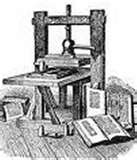 The majority of our day was spent in the Gutenberg Museum, the home of an array of displays covering over a 1000 years of printing history. Several floors of this expansive collection include artifacts, books, printing processes and machines of not only German, but most European countries, China Japan and the works from the Muslim world. It would take days to study it all, although it is laid out for both the scholar and layman alike. There was sufficient reading material in English to make sense of what we were looking at, but the scope of the exhibit allowed for a contribution to the knowledge at whatever level one was approaching it.
Although Gutenberg never achieved much recognition during his life, he left behind an immeasurable contribution to the cultural, scientific, literary and religious climate of the renaisssance period and beyond. Johannes Gutenberg said the idea of of incorporating a removable type came to him "as a ray of light". The idea itself, clearly generated time and cost savings from the previous script form or reproduction. It would take time before the true significance of this invention would begin to realize its immense benefits. It began slowly with works of poetry and then the landmark printing of what is referred to as the Gutenberg Bible. It alone can be described as a critical element in the reformation which was to change the face of Europe. To quote another site:
Gutenberg's contribution to printing was the development of a punch and mold system which allowed the mass production of the movable type used to reproduce a page of text. These letters would be put together in a type tray which was then used to print a page of text. If a letter broke down, it could be replaced. When the printing of the copies of one page was finished, the type could be reused for the next page or the next book.

Housed in what was referred to as a "strong room" were two copies of the Gutenberg Bible. These are the prizes of the collection and for good reason. We owe much to Martin Luther and Gutenburg for making accessible to all knowledge and consequently some of the freedoms we enjoy today.
Although this blog entry offers little in terms of visual appeal, I hope it at leaves the impression that this form of cultural pursuit is also worthy of your time.
Sunday, November 22, 2009
Wartburg - a Composite

This is the case with the Wartburg Castle. It is an amalgam of multiple periods, each shaped to a degree by the contributions of its occupants, designers, or the influence of legendary figures who visited Wartburg or made it their home. It is described as Germany's most favored castle and judging by the number of visitors on this late November day, I can say that there were more visitors than at others we have visited of late. I am going to let some of the links tell the story. They do it very well.
This was our first trip to the former East Germany. Although things have changed dramatically, Alfie shared some interesting tidbits about every place we passed. East Germany experienced a significant exodus during the years of occupation. Now Germans are slowly moving back as property is still to be had there, a little cheaper. Much of Germany's infrastructure capital has been directed to rebuilding the East. This has represented a significant financial burden on the economy. However, German ingenuity, determination and pride are clearly evident in the arts, the orderly reconstruction and the devoted attention they pay to their cultural and linguistic heritage. There is much to be admired here in this beautiful country.
Four things that standout about our visit to Wartburg. The fascinating story of St Elizabeth. Martin Luther translated the New Testament from Greek to German at Wartburg, thus creating the foundation of the Protestant faith and the reformation and at the same time, standardizing the German language. German students met here paving the way for German unity. In early centuries, it became the gathering place, along with the town of Eisenach, for poets, playwrights, artists and musicians. It's rich cultural heritage was maintained throughout the centuries. Architecturally, the castle underwent almost constant renovation while maintaining vestiges of each era, quite an accomplishment. Although this might be best represented as a cultural collage, it has somehow tied them together into a powerful visually engaging way to depict an old castle.

Subscribe to:
Posts (Atom)